


Should You Switch to Synthetic Oil?

When you have had your oil change, undoubtedly you hear the question: Synthetic or conventional (mineral)? If you inquire, you are quickly informed that synthetic oil costs more. If you are like most people, you stay with what you have, but then probably wonder: Is Synthetic better? Is there much of a difference? Let Valley Buick GMC answer that for you.
Mineral motor oil begins as crude oil that is formed from the typical refinement process of separation, conversion, and treatment. Synthetics also have their origin in distilled crude oil but become a completely man-made lubricant that consists of artificially made chemical compounds. Looking at conventional motor oil under a microscope reveals molecules with different shapes, sizes, and structures. By contrast, synthetic oil shows molecules of nearly the same size and structure. There are different kinds of synthetic oils, but synthetic motor oils are known as polyalphaolefins (PAOs). For this article, “synthetic oil” means PAO.
Synthetic Oil Advantages
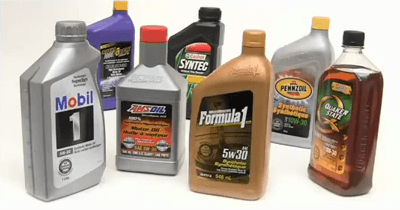
Although synthetic oil was once largely found in high-performance vehicles and even jet engines, it’s being used in more mainstream engines. The American Automobile Association conducted a highly respected study comparing synthetic and mineral oil, and in short, synthetic oils performed 47% better than mineral motor oils. Here are the specifics:
- Greater Engine Protection
Very high heat and just heat over time cause mineral oil to break down, hence the need for regular changing. Fully synthetic oils are far more resistant to breaking down from both heat and time, thus will protect your engine for longer. All things being equal, an engine is more likely to reach very high mileage, such as 200K – 250K miles, with synthetic oil. - Cleaner Engine
All conventional oil contains impurities, and over time, these impurities can form deposits. Eventually, these deposits will build up in the oil to the point they form a sludge which reduces the oil’s effectiveness. Synthetic oil contains far fewer impurities and resists sludge and deposit formation. - More Stable Viscosity
Synthetic oils maintain their viscosity better than conventional oil. So it is less prone to get thinner in heat or thicker in the cold. Consequently, it protects your engine more constantly despite ambient and engine temperature. This is particularly true in areas that encounter extreme heat or cold. - Longer Lasting
Synthetic oil simply maintains its original integrity longer than conventional oil. If you still change oil promptly every 3000 miles, the difference is likely negligible. Still, synthetics can last as much as twice as long, with some brands touting a change intervals as long as 15,000 to 25,000 miles. Buick and GMC maintain an oil change interval of 7,500 to 10,000 miles for most models. If you plan to stretch oil change intervals, be sure to use a high-grade oil filter that can stay effective for the duration. - Turbocharger Protection
Because they are powered by hot exhaust, turbochargers, and related components can generate high levels of heat, which may challenge engine oil’s effectiveness. Being more heat resistant, synthetic oil can be more effective for turbocharged engines.
Synthetic Oil Disadvantages
- Higher Cost
Synthetic oil sometimes costs twice as much as conventional oil. Unless you stretch your oil changes beyond manufacturer recommendations, the overall cost of oil changes will be higher.

On that last point, we should point out that the idea that once you have synthetic oil in your engine, you never go back to mineral oil is a complete myth. It is perfectly safe to switch between or mix synthetic and conventional oil at any time. In fact, conventional oil and synthetic blends are available, which predictably bridge the gap in increased effectiveness and higher cost.
So yes, synthetic oil is better at what it does than mineral oil. Whether it is worth it is the answer you still have to decide for yourself. Compared to much of the country, the Auburn area is not known for extremes in weather. But if you want a better chance of your engine lasting 200K miles or 250K miles, synthetic oil would be a good idea. Just as upgrading to a performance exhaust system can help optimize engine efficiency and airflow, using synthetic oil can improve lubrication, reduce wear, and provide better long-term engine protection. But if you tend to trade your car every few years, it may not be worth the extra maintenance cost. If you still have questions regarding synthetic oil for your Buick or GMC model, contact one of our Valley Buick GMC service professionals for advice.
0 comment(s) so far on Should You Switch to Synthetic Oil?